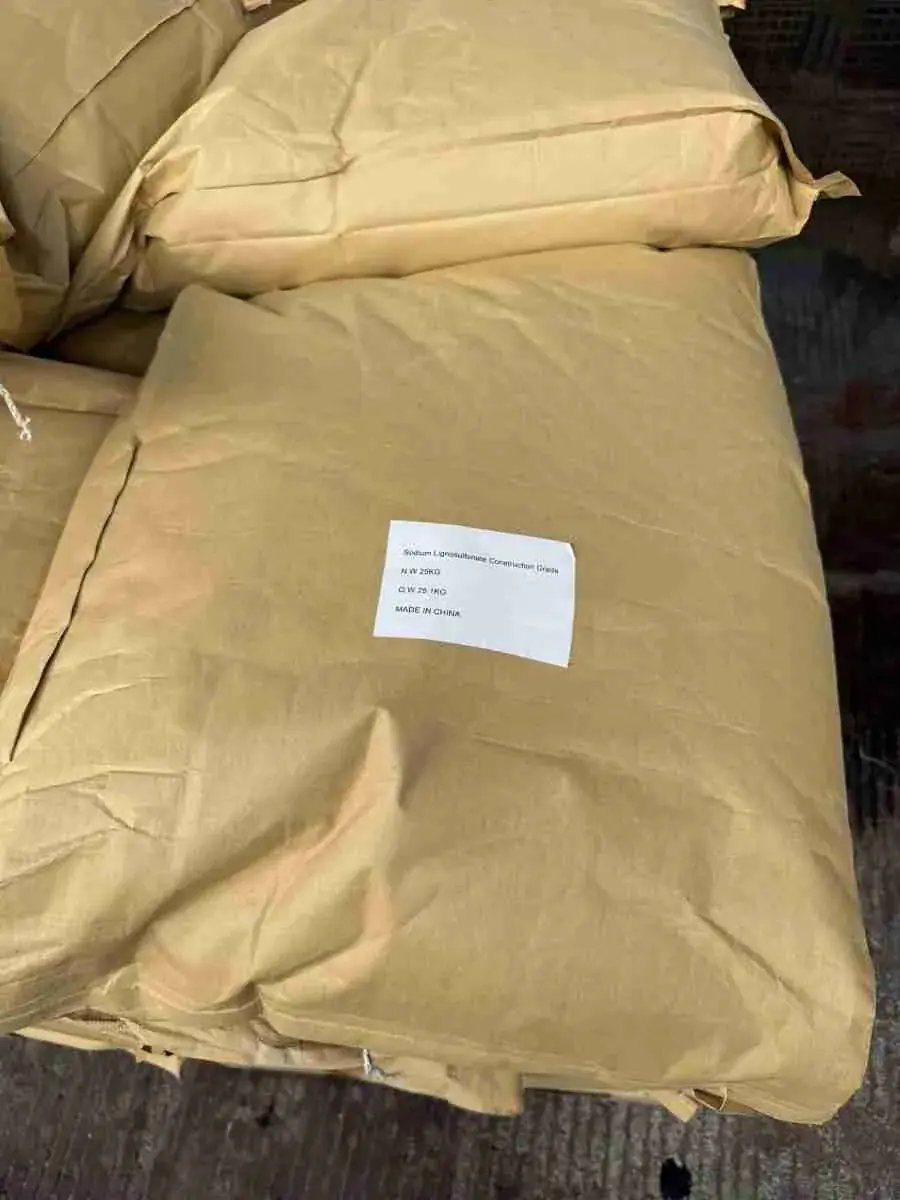
A safety data sheet (SDS) has 16 sections. For sodium lignosulfonate, the sections buyers ask about most are hazard classification, first aid, handling, ecology and transport. This summary follows our SDS for sodium lignosulfonate Grade One (GAC-NaLS-1); each grade has its own SDS, which you can request through ESG documents.
| Section | What our SDS says |
|---|---|
| 1. Identification | Sodium lignosulfonate, CAS 8061-51-6 |
| 2. Hazards | Not classified as hazardous under normal industrial handling, based on available data; no GHS signal word. Fine powder may cause temporary mechanical irritation to eyes, skin, nose or throat; spilled powder can make floors slippery |
| 4. First aid | Inhalation: fresh air. Skin: wash with soap and water. Eyes: rinse with clean water for at least 10 minutes. Ingestion: rinse mouth; do not induce vomiting unless directed |
| 5. Fire-fighting | May burn at high temperature, giving carbon oxides, sulfur oxides and irritating fumes. Use water spray, foam, dry powder or CO₂ |
| 7. Handling and storage | Avoid generating dust; store cool, dry and sealed, away from food/feed and heat; protect liquid grades from freezing |
| 8. Personal protection | Ventilation where dust forms; dust mask if airborne dust is present; safety glasses; gloves and work clothing |
| 10. Stability | Stable under normal conditions; keep away from strong oxidisers, strong acids and strong bases |
| 11. Toxicology | May cause mild eye and skin irritation; no specific acute toxicity documented in available data; not listed as a carcinogen by IARC, NTP or OSHA |
| 12. Ecology | No product-specific aquatic data; generally regarded as low aquatic toxicity; expected to be inherently biodegradable; not expected to bioaccumulate |
| 13. Disposal | Follow local, regional and national rules; do not discharge large quantities into drains or waterways |
| 14. Transport | Not regulated as a dangerous good, based on available information |
| 15. Regulatory | Importers confirm inventory listing and registration requirements in their own market |
What the SDS does not cover
The SDS describes hazards and safe handling. It is not a specification: lignosulfonate content, pH, moisture and other properties are on the technical data sheet, and the results for your batch are on the certificate of analysis.
For handling advice in more detail, see handling hazards of sodium lignosulfonate.
Frequently Asked Questions
Is sodium lignosulfonate a hazardous substance?
According to our SDS it is not classified as hazardous under normal industrial handling, based on available data, and it carries no GHS signal word.
Is sodium lignosulfonate a dangerous good for shipping?
Our SDS states it is not regulated as a dangerous good for transport, based on available information.
Where can I get the SDS for my grade?
Each grade has its own 16-section SDS. Request it through the ESG documents page or the contact page, stating the product and grade.