
When discussing the sustainable raw materials of the future, the word cellulose usually comes up quickly. However, another gigantic biomass treasure often goes unnoticed, even though it makes up a third of all plant biomass on our planet: lignin.
For a long time, the industry viewed this complex biopolymer merely as a pesky byproduct or a cheap fuel source. Today, however, lignin is taking center stage in the global bioeconomy. As one of the few natural sources of aromatic compounds, it has the massive potential to replace petroleum-based plastics, resins, and chemicals.
But what exactly is lignin, and why is it currently revolutionizing materials science?
What is Lignin and What is its Function in Nature?
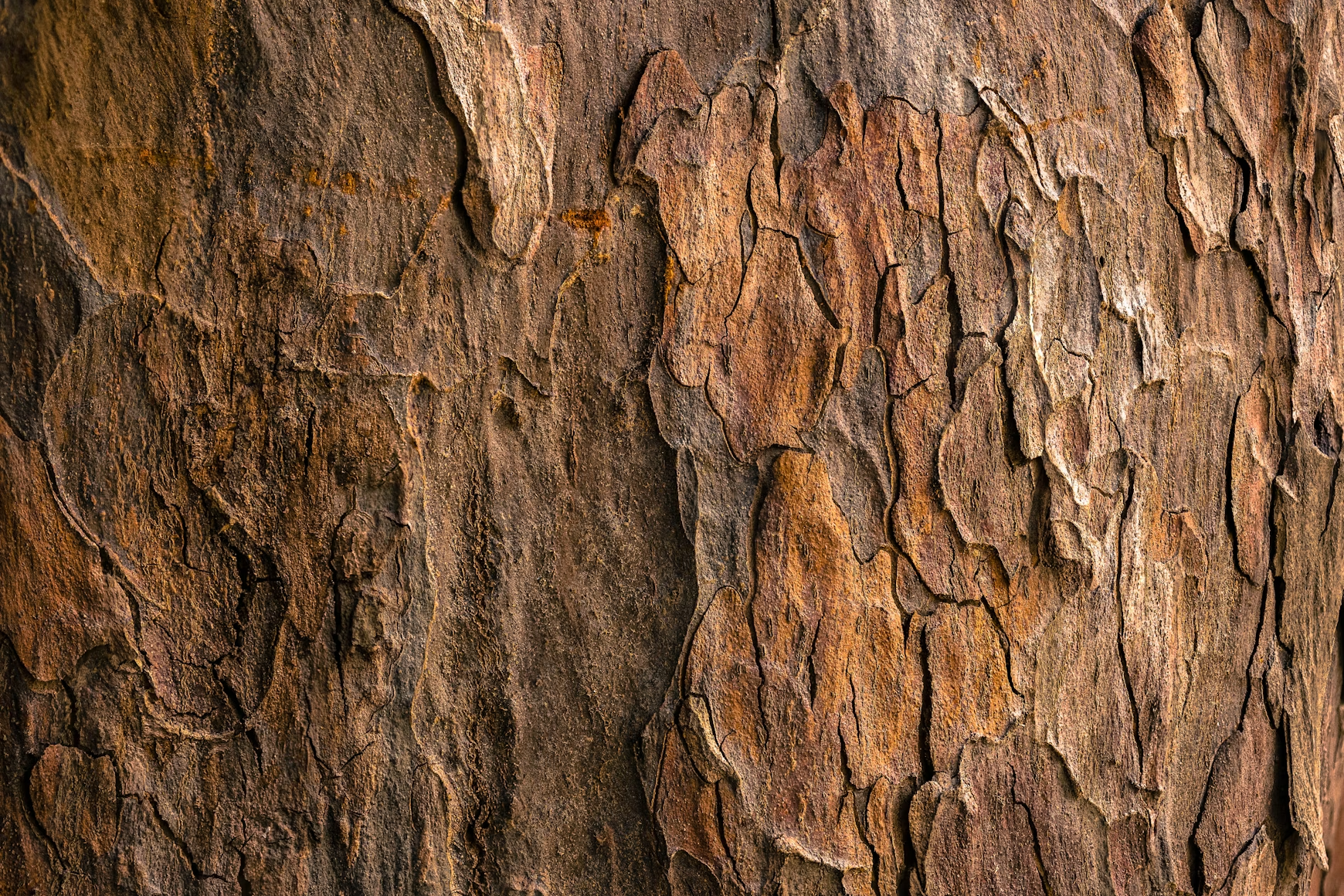
The word lignin is derived from the Latin term lignum, meaning “wood.” Biologically speaking, it is a highly complex, three-dimensional biopolymer. In the plant kingdom, it acts as a sort of natural two-component adhesive.
While cellulose fibers provide the plant with tensile strength, lignin fills the microscopic voids in the cell wall, providing the necessary compressive strength and rigidity. Without lignin, trees couldn’t grow tall; they would simply collapse under their own weight. Furthermore, lignin forms a natural protective barrier against moisture, fungal decay, and pests.
From the Paper Mill to the High-Tech Lab: The Extraction Process
Lignin is generated globally in enormous quantities—estimated at over 50 million tons per year. The primary source is the global pulp and paper industry.
To produce pristine white paper, the brown lignin must be separated from the wood. In the dominant Kraft process (sulfate process), the lignin dissolves into what is known as “black liquor.” Historically, this lignin-rich fluid was simply burned in the mills to generate energy and steam for their own operations.
Today, however, thanks to modern extraction technologies, highly pure Kraft lignin can be isolated as a brown powder and utilized as a highly valuable chemical building block.
Revolutionary Application Areas
The chemical structure of lignin is truly unique: it is the only biopolymer available in massive quantities that consists of aromatic rings (phenols). This structure makes it the perfect green substitute for petrochemical products across numerous high-tech industries:
1. Bio-Plastics and Polyurethanes
Lignin is increasingly being used as a base for sustainable plastics. Through chemical modification, it can replace fossil-based polyols in the production of polyurethane (PU) foams (used in mattresses, car seats, or building insulation). The final product is not only greener but often exhibits enhanced inherent flame-retardant properties.
2. Eco-Friendly Resins and Adhesives
The engineered wood industry (manufacturers of particleboard, MDF, and plywood) relies heavily on petroleum-based phenol-formaldehyde resins. Lignin, as a naturally occurring phenol, can replace a large portion of these toxic, fossil-based chemicals in adhesives. This drastically reduces the emission of harmful formaldehyde in our living spaces.
3. Next-Generation Carbon Fibers
Carbon fibers are extremely light and strong, making them indispensable for the automotive and aerospace industries (lightweight construction). Currently, they are manufactured from expensive, petroleum-based polyacrylonitrile (PAN). Researchers worldwide are successfully working on using lignin as a cost-effective, renewable precursor for carbon fibers. This breakthrough could make electric vehicles and wind turbine blades significantly cheaper and more environmentally friendly in the future.
4. Valuable Fine Chemicals (e.g., Vanillin)
A fascinating fun fact: a large portion of the artificial vanilla flavoring (vanillin) consumed globally today is already derived from lignin (specifically from lignosulfonate). It also serves as a vital starting material for numerous other platform chemicals.




Leave a Reply