Sodium lignosulfonate is made from lignin recovered from the spent liquor of sulfite wood pulping. Its environmental profile has three parts: where the raw material comes from, what the safety data sheet (SDS) says about its behaviour in the environment, and what happens to it in each application. This article covers all three, and states what has not been measured.
Raw material: a pulp-mill side stream
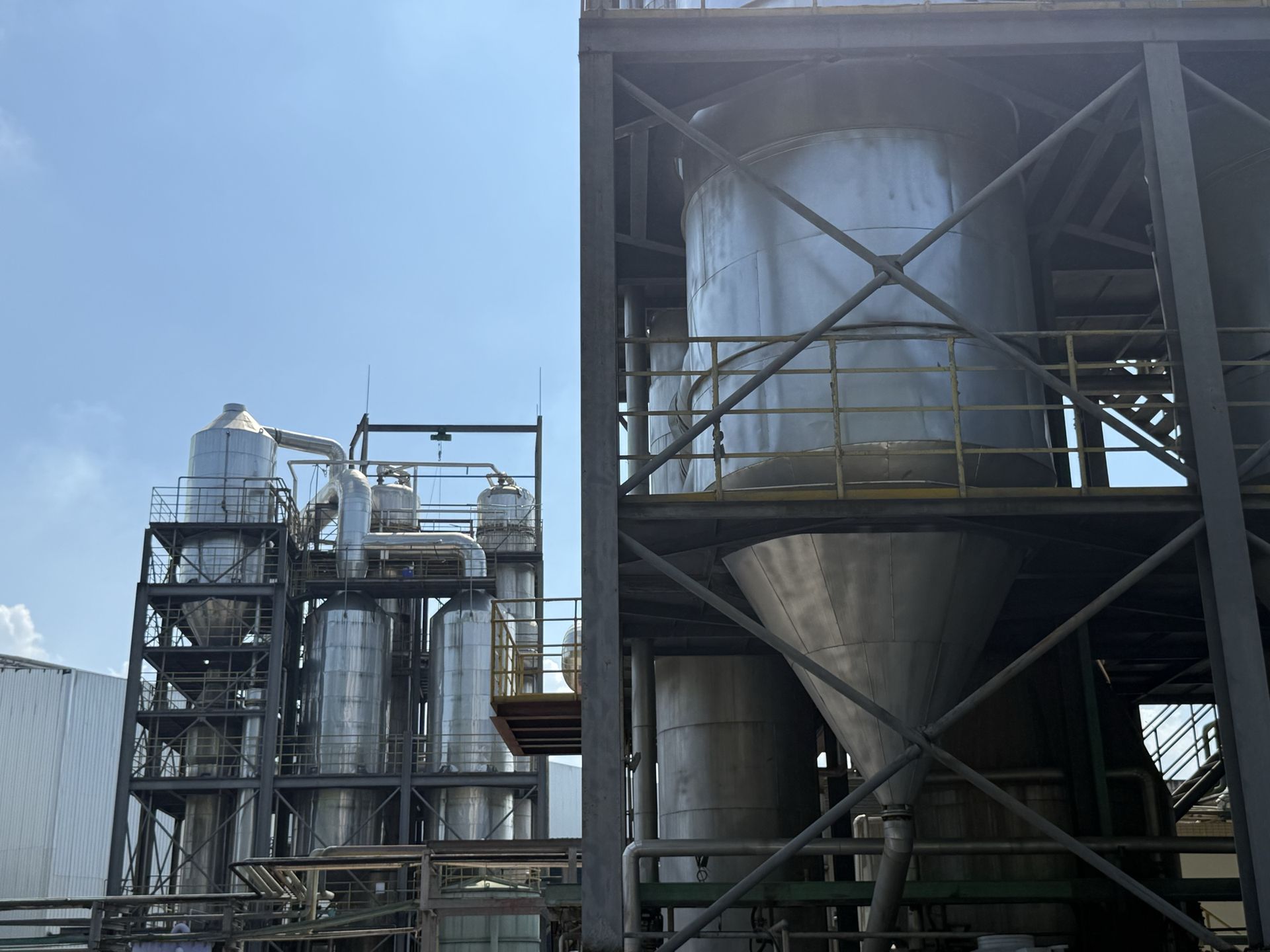
When a pulp mill cooks wood with a sulfite solution to free cellulose fibre, the lignin is sulfonated and dissolved. That lignin-rich liquor is the raw material for sodium lignosulfonate. Recovering it gives a use to a stream that would otherwise have to be burned or treated. See raw-material origin for the processing steps.
What the SDS says
| SDS item | Sodium lignosulfonate |
|---|---|
| GHS classification | Not classified as hazardous under normal industrial handling, based on available data |
| Ecotoxicity | No product-specific aquatic toxicity data; lignosulfonates are generally regarded as having low aquatic toxicity |
| Persistence and degradability | Derived from natural lignin; expected to be inherently biodegradable |
| Bioaccumulation | Not expected to bioaccumulate, given its high water solubility and polymeric/ionic nature |
| Mobility in soil | Mobile in the soil profile due to high water solubility |
| Disposal | Follow local, regional and national rules; do not discharge large quantities into drains or natural waterways |
Impact by application
- Concrete and gypsum. Used at a low dose as a water reducer; it ends up bound in the hardened material.
- Dust control on unpaved roads. Applied directly to the ground. Because it is water-soluble and mobile in soil, heavy rain can wash part of it off, so application near watercourses should follow local rules.
- Agriculture. Used as a binder, dispersant or micronutrient carrier and applied to soil at label rates, where it is expected to degrade.
- Industrial processes. Wastewater containing lignosulfonate adds colour and organic load (COD), so it should go to treatment rather than straight to a waterway.
What has not been measured
- No aquatic toxicity test has been run on our product; the low-toxicity statement refers to lignosulfonates in general.
- No standard biodegradation test has been run; “inherently biodegradable” is an expectation based on its lignin origin.
- No life-cycle assessment (LCA) has been completed, so we do not state a carbon footprint.
The same SDS data for all our product families is in the environmental and safety data table.
Frequently Asked Questions
Is sodium lignosulfonate harmful to the environment?
Its SDS classifies it as not hazardous under normal handling, and lignosulfonates are generally regarded as having low aquatic toxicity. Large quantities should still not be discharged into drains or waterways, because it adds colour and organic load to water.
Does sodium lignosulfonate break down in nature?
It is derived from natural lignin and is expected to be inherently biodegradable. Our product has not been tested to a standard biodegradation method.
Can sodium lignosulfonate contaminate groundwater?
It is highly water-soluble and mobile in soil, so it can move with water. Follow local rules for applications near watercourses and avoid spills of concentrated liquid.