

As modern agriculture faces the dual challenges of soil degradation and climate change, the demand for sustainable, effective soil amendments is at an all-time high. Lignosulfonate, a highly versatile, bio-based polymer, has emerged as a powerhouse ingredient for soil conditioning.
Derived from lignin—the natural glue that gives plants and trees their structural strength—lignosulfonate offers a unique combination of physical and chemical benefits that revitalize exhausted soils, improve water retention, and enhance crop yields.
What is Lignosulfonate?
Lignosulfonate is a complex, water-soluble organic polymer produced as a byproduct of the wood-pulping industry. During the sulfite pulping process, lignin is extracted from wood and converted into lignosulfonate. Because it originates from renewable plant matter, it is rich in organic carbon, fully biodegradable, and highly valuable in agricultural applications.
In the context of agronomy, it is applied directly to the earth or mixed into fertilizers to act as a soil conditioner—a substance that improves the soil’s physical qualities, making it more capable of supporting robust plant growth.
How Lignosulfonates Transform Soil Structure
1. Superior Soil Aggregation (The “Natural Glue”)
Healthy soil relies on good structure, where soil particles bind together into clumps called “aggregates.” Lignosulfonates possess excellent natural adhesive properties. When applied to loose or degraded soils (like sandy or heavily tilled fields), they bind soil particles together. This improves soil aeration, enhances root penetration, and drastically reduces wind and water erosion.
2. Powerful Nutrient Chelation
One of the most valuable properties of lignosulfonate is its ability to act as a chelating agent. Many essential micronutrients—such as iron, zinc, manganese, and copper—can become “locked up” and unavailable to plants, especially in alkaline soils. The negatively charged functional groups in lignosulfonate wrap around these positively charged metal ions, protecting them from reacting with the soil and keeping them in a water-soluble form that plant roots can easily absorb.
3. Enhanced Moisture Retention
Water scarcity is a growing agricultural threat. The large, sponge-like molecular structure of lignosulfonates helps increase the water-holding capacity of the soil. By minimizing evaporation and runoff, lignosulfonate ensures that moisture stays in the root zone longer, reducing irrigation demands and helping crops survive drought stress.
4. Stimulation of Soil Microbiology
Healthy soil is living soil. Lignosulfonates provide a rich, accessible source of organic carbon. This carbon acts as a food source for beneficial soil microbes, stimulating microbial activity. A thriving microbial community accelerates the breakdown of organic matter, naturally suppresses soil-borne diseases, and improves overall nutrient cycling.
Key Benefits for Farmers and Formulators
For those looking to optimize their crop management strategies, using lignosulfonate as a soil conditioner delivers measurable ROI:
- Erosion Control & Dust Suppression: Highly effective in stabilizing topsoil, making it a favorite for both agricultural fields and unpaved farm roads.
- Reduced Fertilizer Waste: By chelating nutrients and preventing leaching, it ensures that the fertilizers applied actually reach the plant, reducing chemical runoff into waterways.
- Salinity Mitigation: Lignosulfonates can help buffer the effects of high soil salinity, creating a more forgiving environment for seed germination and root development.
- Eco-Friendly Profile: It is a non-toxic, non-corrosive, and renewable resource that supports organic farming practices and boosts ESG (Environmental, Social, and Governance) compliance.
Application Methods in Agriculture
Lignosulfonate is highly adaptable and can be integrated into existing farming practices through several methods:
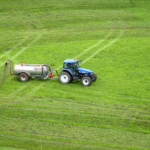
- Direct Soil Application: Applied as a liquid spray directly onto the soil surface prior to planting to stabilize the seedbed.
- Fertilizer Coating: Used as a binding and coating agent for granular fertilizers (like NPKs or Urea) to slow nutrient release and reduce dust.
- Irrigation Systems (Fertigation): Mixed into irrigation water alongside liquid fertilizers to distribute its chelating and moisture-retaining benefits evenly across a field.



Leave a Reply