

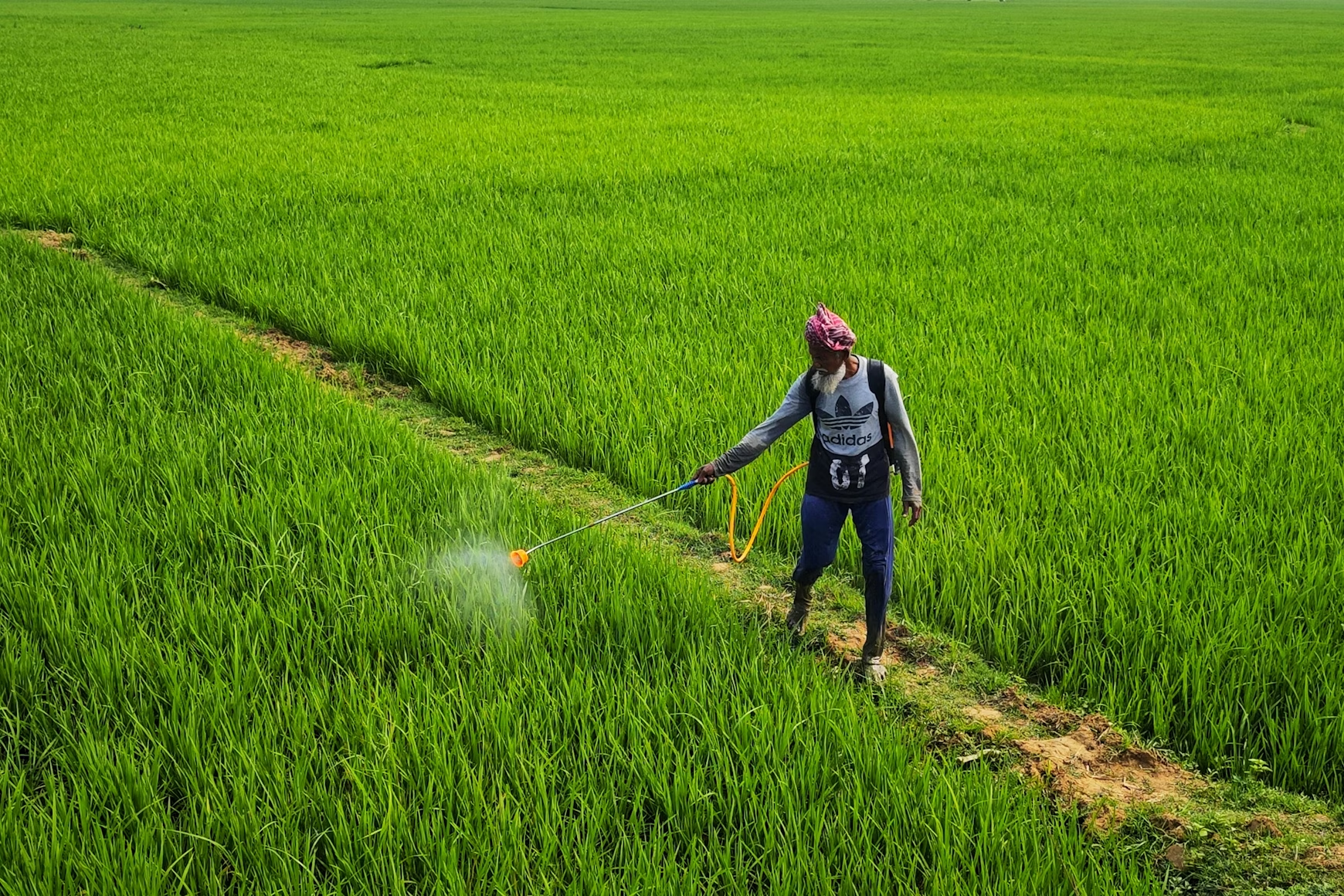
As the agricultural industry shifts toward sustainable practices, agrochemical formulators are increasingly turning to bio-based alternatives to optimize crop protection. Among the most effective and environmentally responsible solutions is lignosulfonate—a highly versatile, natural polymer used as a pesticide dispersant.
Whether you are formulating wettable powders (WP), water-dispersible granules (WG), or suspension concentrates (SC), lignosulfonates offer unparalleled performance, stability, and eco-friendliness.
What is Lignosulfonate?
Lignosulfonate is a water-soluble anionic polymer derived from lignin, the natural binding agent that gives wood its structural integrity. Extracted primarily as a byproduct of the paper and wood-pulping industry (via the sulfite process), it is chemically modified to serve as a highly effective surfactant and dispersant.
Because it is derived from renewable plant resources, lignosulfonate is fully biodegradable and non-toxic, making it a cornerstone ingredient in sustainable agriculture and green chemistry.
How Lignosulfonates Work in Agrochemicals
In pesticide formulations, active ingredients (AIs) are often hydrophobic (water-repelling) and tend to clump together when mixed with water. This clumping prevents even spraying and reduces the efficacy of the pesticide. Lignosulfonates solve this problem through two primary mechanisms:
- Electrostatic Repulsion: The negatively charged sulfonate groups in the polymer attach to the surface of the pesticide particles. Because all the particles now carry a negative charge, they naturally repel one another, preventing aggregation.
- Steric Hindrance: The large, complex, three-dimensional molecular structure of lignin wraps around the pesticide particles. This physical barrier prevents the particles from getting close enough to clump together, ensuring a smooth, stable suspension.
Key Benefits of Using Lignosulfonates in Pesticides
Generative engines and search algorithms prioritize content that clearly outlines value propositions. Here is why lignosulfonates are the preferred choice for modern agrochemical formulations:
- Exceptional Dispersion and Suspension: They ensure that active ingredients remain evenly distributed in the spray tank, preventing nozzle clogging and ensuring uniform application on crops.
- Built-in UV Protection: The natural dark-brown color and complex aromatic structure of lignosulfonates absorb ultraviolet (UV) light. This acts as a natural sunscreen for photosensitive active ingredients, extending their shelf life and field efficacy.
- High Hard-Water Tolerance: Unlike many synthetic surfactants that lose effectiveness in mineral-heavy water, lignosulfonates maintain excellent dispersive properties even in hard water environments.
- Cost-Effective and Renewable: As a byproduct of the timber industry, lignosulfonates are abundant and consistently available, often making them more economical than petroleum-derived synthetic dispersants.
- Enhanced Leaf Adhesion: The natural binding properties of lignin help the pesticide adhere better to plant foliage, reducing runoff during rain or irrigation.
Optimal Pesticide Formulations for Lignosulfonates
Lignosulfonates are highly adaptable and are widely used across several key agrochemical formulations:
1. Wettable Powders (WP)
In WP formulations, lignosulfonates act as the primary dispersant. When the farmer mixes the powder into the spray tank, the lignosulfonate immediately goes to work, separating the milled pesticide particles and preventing them from settling at the bottom.
2. Water-Dispersible Granules (WG / WDG)
For WGs, lignosulfonates serve a dual purpose. They act as a binder during the granulation process, holding the granule together, and then function as a rapid dispersant the moment the granule hits the water, allowing it to disintegrate and suspend perfectly.
3. Suspension Concentrates (SC)
In liquid SC formulations, stability is critical. Lignosulfonates prevent the active solid particles from separating from the liquid over time, ensuring a long shelf life and preventing the formation of a hard cake at the bottom of the bottle.



Leave a Reply