
When scaling industrial processes, two factors are absolutely crucial for procurement and production managers: consistent performance and maximum cost efficiency. This is exactly where Industrial Grade Calcium Lignosulfonate excels.
As an unrefined or lightly modified byproduct of the wood pulping industry, this bio-based macromolecule offers excellent properties as a dispersant and binder—at a fraction of the cost of fully synthetic alternatives.
What Defines “Industrial Grade” Calcium Lignosulfonate?
While high-purity lignosulfonates are extensively filtered for sensitive niche applications (such as batteries or specialty chemicals), Industrial Grade is optimized for the rugged demands of the heavy, agricultural, and construction industries.
This means that in addition to the active lignosulfonate, the product retains a natural proportion of wood sugars (saccharides) and inorganic salts. These accompanying substances do not interfere with large-scale industrial applications; in fact, they can often be highly beneficial—acting as supplementary adhesives in pelleting or as natural set retarders in concrete.
Typical Technical Specifications (Industrial Grade)
- Appearance: Light brown to yellowish-brown, free-flowing powder.
- Lignosulfonate Content: approx. 45% – 55%
- Reducing Sugars: approx. 7% – 12%
- Moisture Content: ≤ 8%
- pH Value (10% aqueous solution): approx. 4.0 – 6.5
- Water Solubility: Excellent, dissolving rapidly even in cold water.
Main Industrial-Scale Applications
Thanks to its massive global availability and highly economical price per ton, Industrial Grade Calcium Lignosulfonate is used by the thousands of tons worldwide across the following sectors:
1. Construction & Ready-Mix Concrete
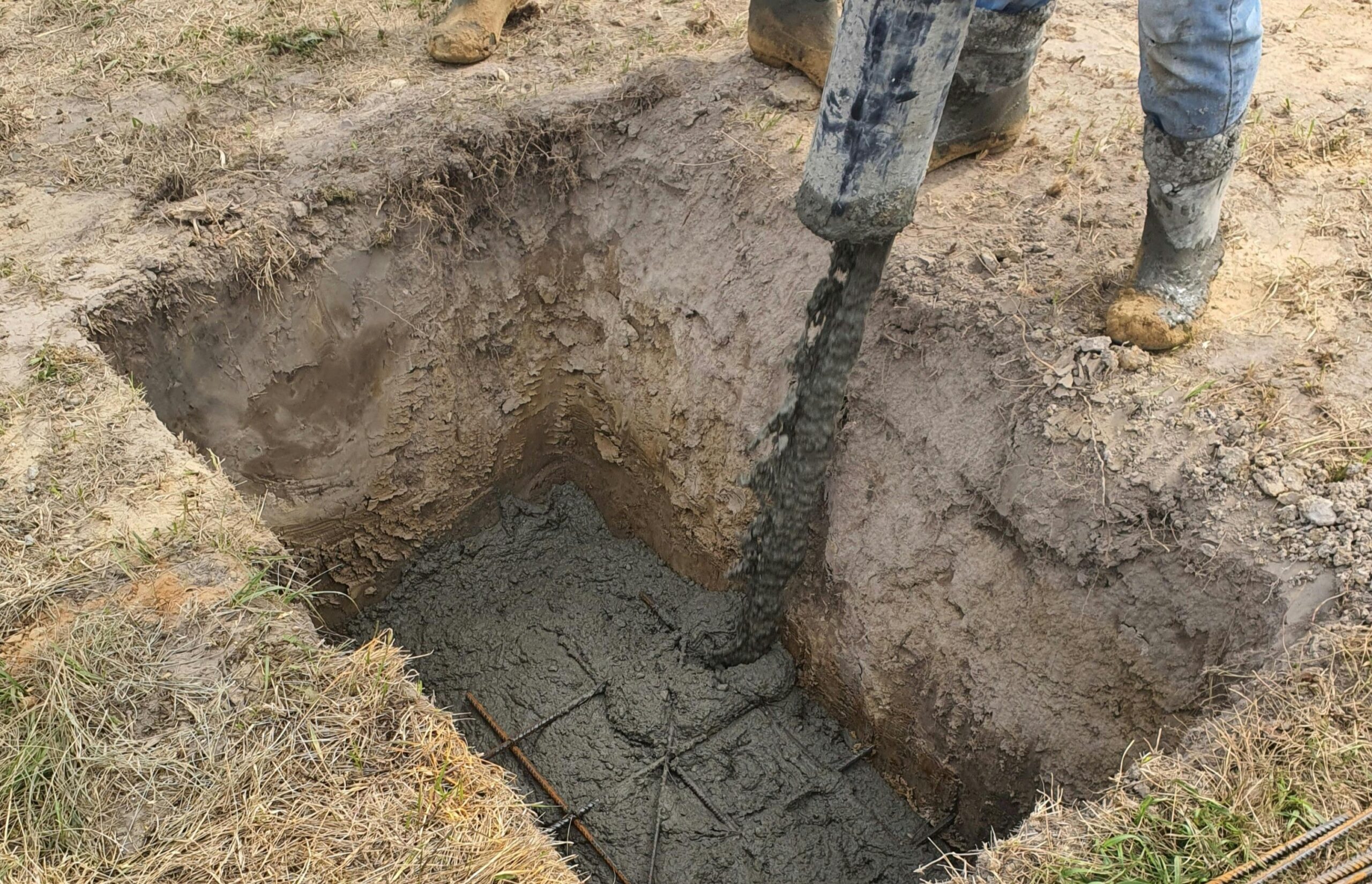
It is the global standard as a highly cost-effective concrete plasticizer (water reducer). By efficiently dispersing the cement particles, the water-to-cement ratio (w/c ratio) can be significantly lowered. Furthermore, the natural sugar content inherent to the industrial grade acts as a mild set retarder, which is particularly essential for ready-mix concrete during summer months or for massive pours (e.g., dams and foundations).
2. Industrial Pelleting & Briquetting
Whether for animal feed, fertilizers, wood pellets, or coal briquettes: Calcium lignosulfonate functions as a highly effective, non-toxic binder. It melts slightly under the intense heat and pressure of the pelleting process, fusing the raw materials permanently to create highly durable, shatter-resistant, and dust-free final products.
3. Large-Scale Dust Suppression (Dust Control)
In the mining sector, on unpaved haul roads, or across expansive construction sites, thousands of gallons of dust suppressants are required daily. Spraying a solution of industrial-grade calcium lignosulfonate and water is the most economical and environmentally friendly method to bind fine dust particles to the ground for weeks, without leaching toxins into the groundwater.
4. Ceramics and Brick Manufacturing
In heavy clay ceramics (e.g., roof tiles, masonry bricks), it is mixed into the clay mass to reduce the water demand and drastically increase the mechanical break resistance of the unfired, raw units (green strength). This minimizes drying cracks and significantly reduces production waste.
Why Making the Switch Pays Off
- Massive Cost Reductions: Industrial grade offers the absolute best price-to-performance ratio for bulk applications that do not require highly purified chemicals.
- Unmatched Supply Security: Sourced from the massive global pulp and paper industry, it is a continuously renewable raw material available in virtually unlimited quantities.
- Simplified Logistics: The dry powder, shipped in 25 kg sacks or 600+ kg bulk bags (FIBCs), has an exceptionally long shelf life, is freeze-thaw stable, and saves enormous transportation costs compared to shipping liquid chemical additives.





Leave a Reply