

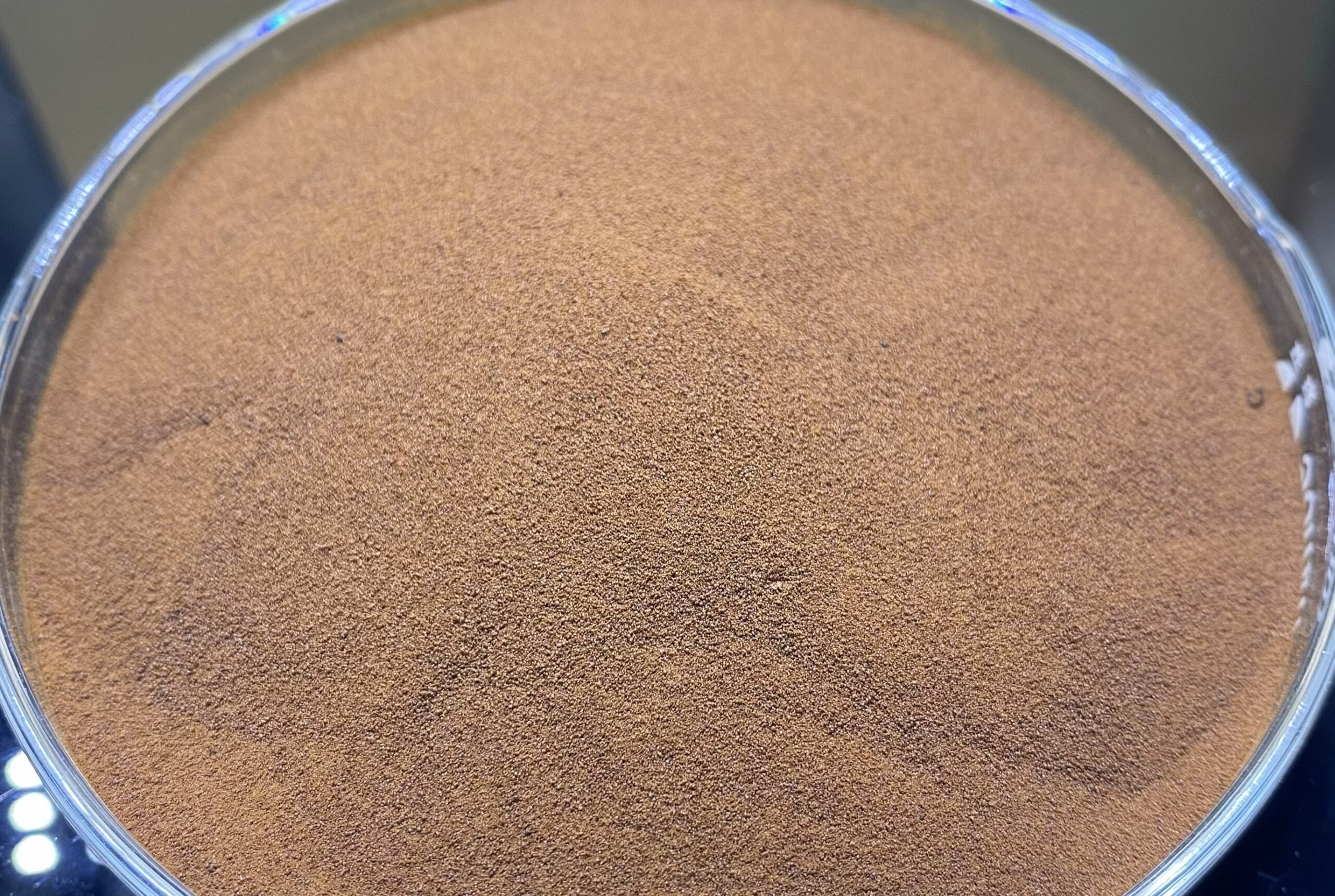
As the global construction industry shifts toward sustainable and cost-effective building materials, lignosulfonate has cemented its position as a powerhouse concrete admixture. Derived from natural plant lignin—a renewable byproduct of the paper pulping industry—lignosulfonate functions primarily as a highly effective water reducer, plasticizer, and set retarder.
By altering the physical and chemical dynamics of a concrete mix, lignosulfonates allow structural engineers to significantly reduce water content without compromising the fluid flow of the mix.
How Lignosulfonate Works: The Chemical Mechanism
- Electrostatic Repulsion (Dispersion): When dry cement mixes with water, the particles naturally clump together (flocculate), trapping water inside and making the concrete stiff. Lignosulfonate polymers feature negatively charged sulfonate groups. When added to the mix, these molecules adsorb onto the surface of the cement grains, giving them a negative charge. Because like charges repel, the cement particles push away from one another, breaking up the clumps and releasing the trapped water to lubricate the mix.
- Hydration Control: Lignosulfonate forms a temporary microscopic coating around the cement particles. This physical barrier slows down the initial hydration process (the chemical reaction between cement and water), which delays the setting time of the concrete.
Core Benefits of Lignosulfonate in Concrete
Integrating lignosulfonate into a concrete formulation delivers major structural, operational, and economic advantages:
1. Significant Water Reduction & Increased Strength
The primary function of lignosulfonate is to reduce the amount of water required to achieve a workable mix—typically by 9% to 15%.
- The Result: Lowering the water-to-cement ratio eliminates excess capillary pores that form when water evaporates. This creates a much denser concrete matrix, routinely increasing the 28-day compressive strength by 15% to 30%.
2. Enhanced Workability and Flowability
By dispersing the cement particles, lignosulfonate acts as a potent plasticizer. It transforms stiff, unmanageable mixes into highly fluid concrete.
- The Result: The concrete becomes significantly easier to mix, pour, spread, and pump. It flows smoothly into complex formworks and densely reinforced rebar grids, reducing labor costs and equipment strain.
3. Strategic Set Retardation
Because it slows the hydration reaction, lignosulfonate extends the window of time that concrete remains workable.
- The Result: This is an absolute necessity for hot weather construction, where heat causes concrete to set too quickly and crack. It is also critical for ready-mix concrete suppliers who need to transport concrete over long distances before pouring.
4. Improved Long-Term Durability
Concrete made with lignosulfonate lasts longer and requires less maintenance.
- The Result: The denser matrix significantly reduces permeability, blocking water, road salts, and aggressive chemicals (like chlorides and sulfates) from penetrating the concrete and rusting the internal steel rebar. Furthermore, lignosulfonates naturally entrain a small amount of microscopic air bubbles (2-3%), which gives freezing water room to expand, drastically improving freeze-thaw resistance.
5. Unmatched Sustainability and Cost-Efficiency
From an ESG (Environmental, Social, and Governance) perspective, lignosulfonates are highly desirable.
- The Result: They are 100% bio-based, upcycling wood-pulping waste that might otherwise be discarded. Additionally, because they are an industrial byproduct, they cost a fraction of the price of highly synthesized petrochemical admixtures, allowing contractors to lower material costs without sacrificing structural integrity.
Comparing Concrete Plasticizers
To understand where lignosulfonate fits in the market, here is how it compares to other common synthetic superplasticizers:
| Admixture Type | Average Water Reduction | Relative Cost | Environmental Profile | Best Use Case |
| Lignosulfonate (NaLS / CaLS) | 9% – 15% | Very Low | High (Renewable, bio-based) | General purpose, mass pours, ready-mix, hot weather. |
| Naphthalene Sulfonate (NSF) | 15% – 25% | Moderate | Low (Petroleum-based) | High-strength commercial concrete. |
| Polycarboxylate Ethers (PCE) | Up to 30%+ | High | Low (Synthetic polymer) | Ultra-high-performance concrete (UHPC), self-compacting concrete. |
Ideal Industry Applications
Given its unique fluidizing and retarding properties, lignosulfonate is the admixture of choice for:
- Mass Concrete Pours: Controls the massive heat generated by hydration in large structures (like dams and deep foundations), preventing thermal cracking.
- Pumped Concrete: Lubricates the mix so it can be pushed through hundreds of feet of hose to the top floors of high-rise skyscrapers.
- Green Building Projects: Helps commercial developers achieve LEED certification and lower the overall carbon footprint of their structures.



Leave a Reply