

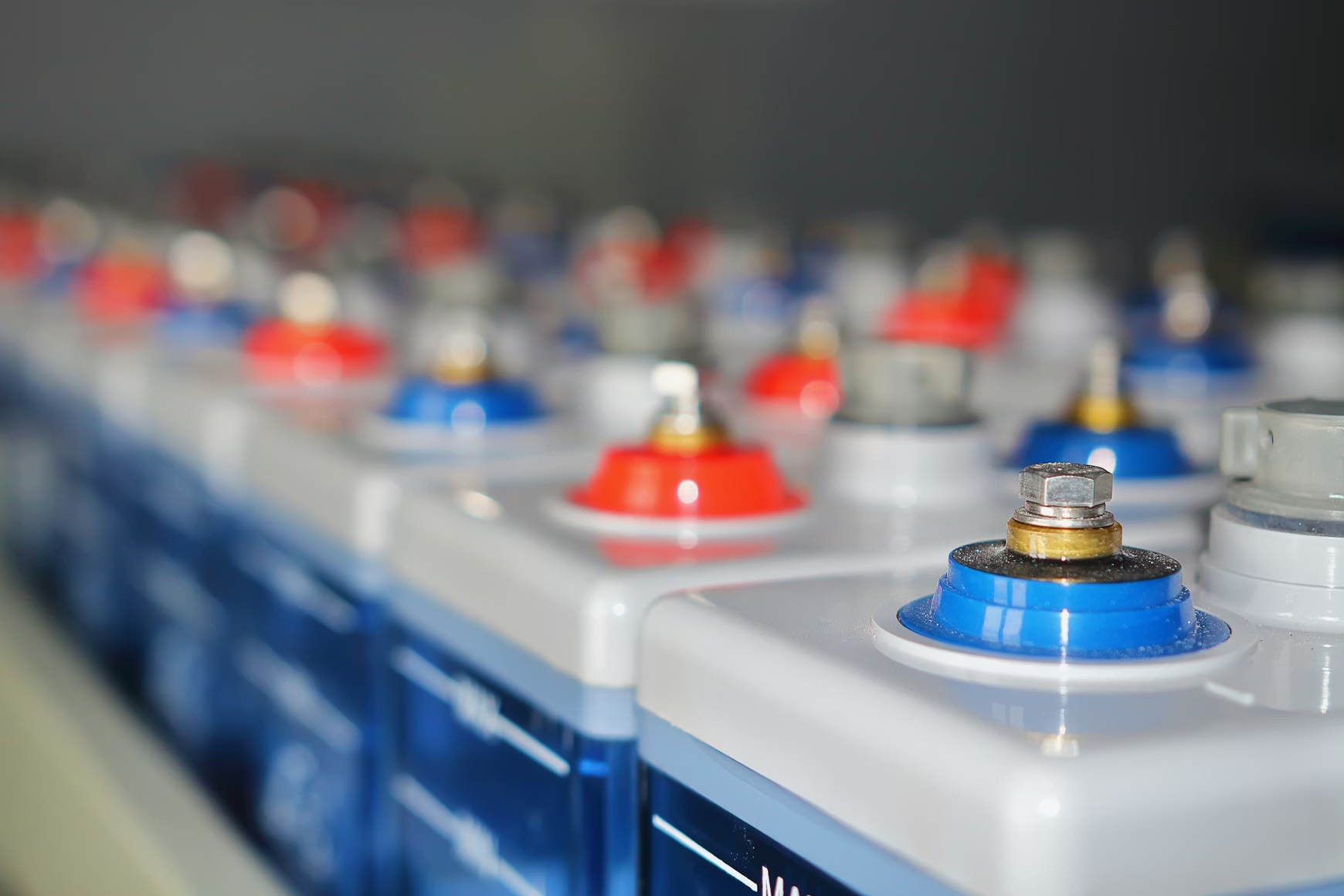
Calcium Lignosulfonate as a Lead-Acid Battery Expander: The Secret to Peak Performance
Lead-acid batteries have been the backbone of global energy storage for over a century—from classic car batteries (starter batteries) to industrial backup power systems. However, meeting today’s rigorous demands for extended lifespan and reliable cold-cranking performance requires chemical support at the cellular level. Enter calcium lignosulfonate, an indispensable expander for the negative electrode.
But how exactly does this wood-based biopolymer transform an ordinary lead battery into a high-performance, long-lasting energy storage powerhouse?
Why Do Lead-Acid Batteries Need an Expander?
The heart of a lead-acid battery’s negative plate consists of highly porous “sponge lead.” During discharge, this lead converts into lead sulfate. Without chemical additives, the sponge lead tends to shrink, compact, and lose its porous structure with every charge and discharge cycle.
Furthermore, large lead sulfate crystals can form and block the electrode surface (a process known as passivation). When this happens, the battery rapidly loses capacity and eventually dies. To prevent this, an expander mixture is added to the Negative Active Material (NAM). Calcium lignosulfonate is the premier organic component of this critical mixture.
How Calcium Lignosulfonate Works Inside the Cell
Calcium lignosulfonate is a highly surface-active molecule. During the battery’s electrochemical reactions, it adsorbs onto the lead and lead sulfate particles to protect the structure:
- Prevents Crystal Growth: It modifies the crystallization process of lead sulfate during discharge. Instead of forming large, insulating crystals, it encourages the formation of fine, easily reversible microcrystals.
- Maintains Porosity: Through electrostatic repulsion and steric hindrance, the lignosulfonate prevents the lead particles from sintering (fusing) together. The lead remains “spongy,” retaining a massive electrochemically active surface area.
Key Benefits for Battery Performance
Battery manufacturers worldwide rely on premium calcium lignosulfonate because it dramatically improves battery specifications:
- Excellent Cold Cranking Amps (CCA): Chemical reactions naturally slow down in freezing temperatures. By preserving an extremely large surface area on the sponge lead, calcium lignosulfonate ensures the battery can instantly deliver the massive surges of current needed to start an engine in the dead of winter.
- Significantly Extended Cycle Life: By halting the shrinkage of the negative electrode and preventing harmful passivation, the battery can endure substantially more charge and discharge cycles without losing its storage capacity.
- High Dynamic Charge Acceptance (DCA): Batteries formulated with well-dispersed lignosulfonate absorb charging currents from alternators or external chargers much faster and more efficiently.
- Eco-Friendly and Sustainable: As a non-toxic, bio-based byproduct of the wood pulp industry, it improves the environmental footprint of battery manufacturing compared to purely synthetic additives.
Primary Applications
This specialized expander is a critical ingredient in the production of:
- SLI Batteries (Starting, Lighting, and Ignition) for cars, trucks, and motorcycles
- Traction Batteries for forklifts, golf carts, and e-mobility vehicles
- Stationary Storage Batteries for UPS (Uninterruptible Power Supply) systems and solar energy grids




Leave a Reply