
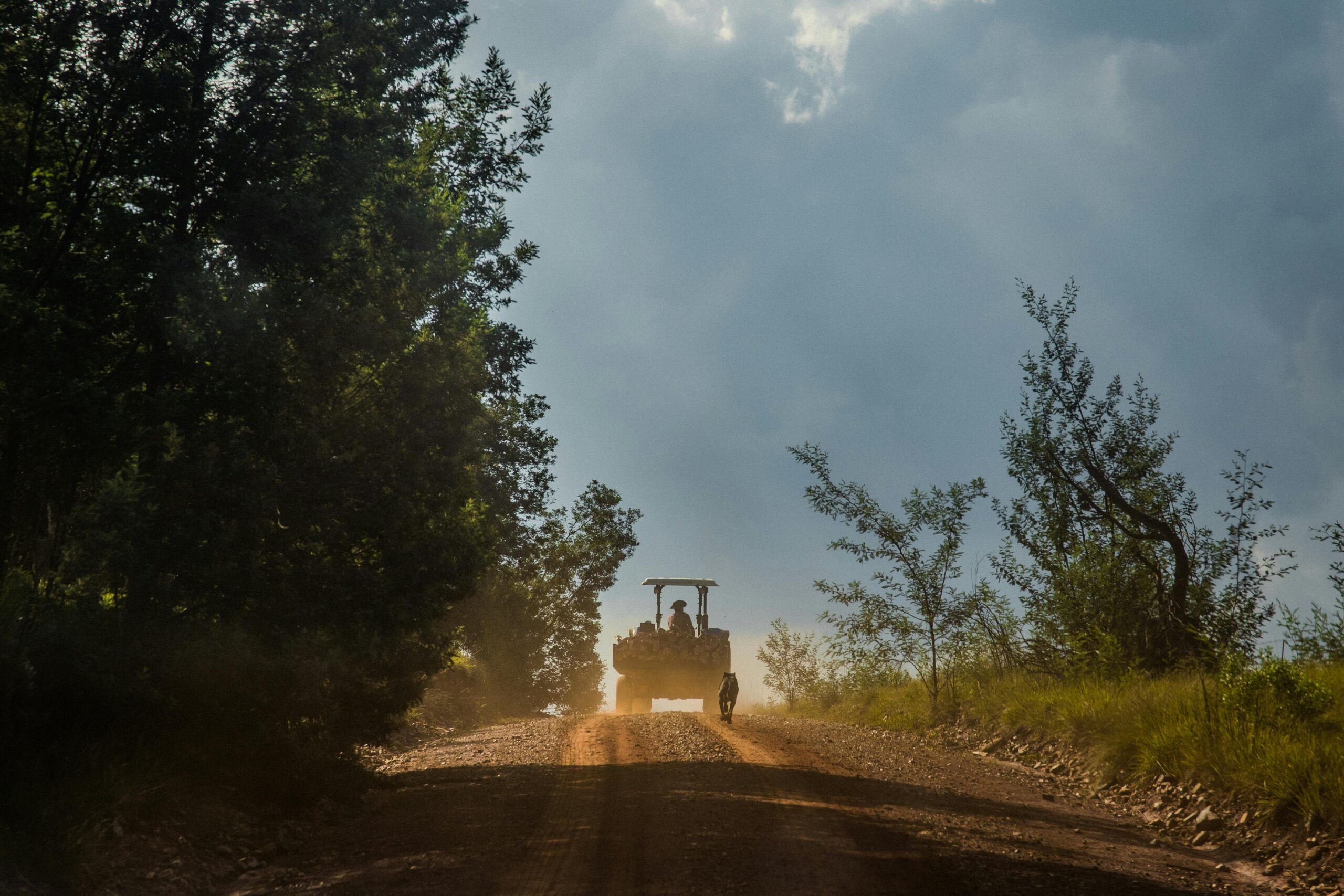
Living on or managing a dirt road sounds peaceful—until the dry season hits. Suddenly, every passing pickup truck or tractor leaves you choking in a massive cloud of airborne dirt. Not only does this fugitive dust coat your windows, ruin your outdoor air quality, and trigger allergies, but it also means your actual road is literally blowing away into the wind.
For years, the standard response was to constantly run a water truck (which evaporates in hours) or dump harsh chemical salts on the ground (which rusts out your vehicles). Today, however, property owners and county road managers are turning to a much smarter, eco-friendly alternative: using lignosulfonate for dirt road dust control.
Why Dirt Roads Turn into Dust Bowls
To understand the cure, you have to understand the disease. A dirt road isn’t just random soil; it relies on a specific structural balance. The microscopic particles—known as “fines,” silt, and clay—act as the mortar that holds the larger soil clumps and stones together.
When a dirt road dries out, those fines lose their natural moisture bond. The friction from vehicle tires easily breaks them loose, launching them into the air. Once the fines blow away, the road loses its structural integrity. This directly causes:
- Washboarding: Those rhythmic, bone-rattling ridges that destroy your vehicle’s suspension.
- Deep Rutting: Weak spots in the dirt that will eventually trap water and turn into massive mudholes when it finally rains.
- Material Loss: The road surface physically shrinks, eventually requiring you to haul in expensive replacement dirt or base material.
The Science of Lignosulfonate: Nature’s Glue
So, how do you stop the fines from blowing away? You glue them down.
Lignosulfonate is a highly effective, water-soluble biopolymer. It is derived from lignin, the natural, organic resin that binds cellulose fibers together in trees, giving wood its incredible strength and flexibility. During the paper-making process, this lignin is extracted as a byproduct, meaning lignosulfonate is a 100% upcycled and sustainable resource.
When diluted with water and sprayed onto a dirt road, the lignosulfonate solution penetrates the loose soil. As the water evaporates into the air, the natural tree resin cures and hardens. It physically and chemically binds the microscopic dust particles to the larger soil base, creating a tough, hardened road crust.
Why Lignosulfonate Beats the Alternatives
1. It Protects Your Vehicles (100% Non-Corrosive)
The most common chemical dust suppressants on the market are chloride salts, like magnesium chloride and calcium chloride. While they do keep dust down by pulling moisture from the air, they are brutally corrosive. They will aggressively rust the undercarriage, brake lines, and wiring of your cars, tractors, and farm equipment. Lignosulfonate, on the other hand, contains zero corrosive salts.
2. It is Completely Safe for the Environment
Because it is literally made from tree sap, lignosulfonate is non-toxic and fully biodegradable. If it rains and some of the runoff reaches the ditch, it won’t poison local streams, harm nearby agricultural crops, or contaminate your well water. It is perfectly safe for kids, pets, horses, and livestock to walk on.
3. It Dramatically Hardens the Soil Base
Unlike plain water, which just makes the dirt heavy for a little while, lignosulfonate actually changes the structural dynamics of the road. By gluing the soil particles together, it creates a hard-packed, stabilized surface that resists traffic wear. Treated dirt roads suffer from significantly less washboarding and rutting, drastically reducing the number of times you need to hire someone to grade the road.
How to Apply Lignosulfonate to a Dirt Road
You can’t just spray this product on top of a hard, dusty crust and expect it to work perfectly. For a long-lasting treatment that survives the whole dry season, follow a basic mechanical integration process:
- Break the Surface: Use a grader, box blade, or tractor implement to break up the top couple of inches of the dirt road. This removes existing washboards and exposes fresh, loose soil.
- Establish a Crown: Ensure the road is slightly higher in the middle so that when the rain finally does come, water runs off to the ditches rather than pooling on the road.
- Pre-Wet the Dirt: Lightly water the road. This breaks the surface tension of the dry soil, allowing the lignosulfonate to soak deep into the dirt rather than just puddling on top.
- Apply the Solution: Spray the liquid lignosulfonate evenly across the loosened dirt.
- Compact it Down: While the road is still damp, drive over it. Normal vehicle traffic works, but a heavy pneumatic roller is even better. This forces the dirt particles and the natural glue tightly together as it cures.




Leave a Reply