
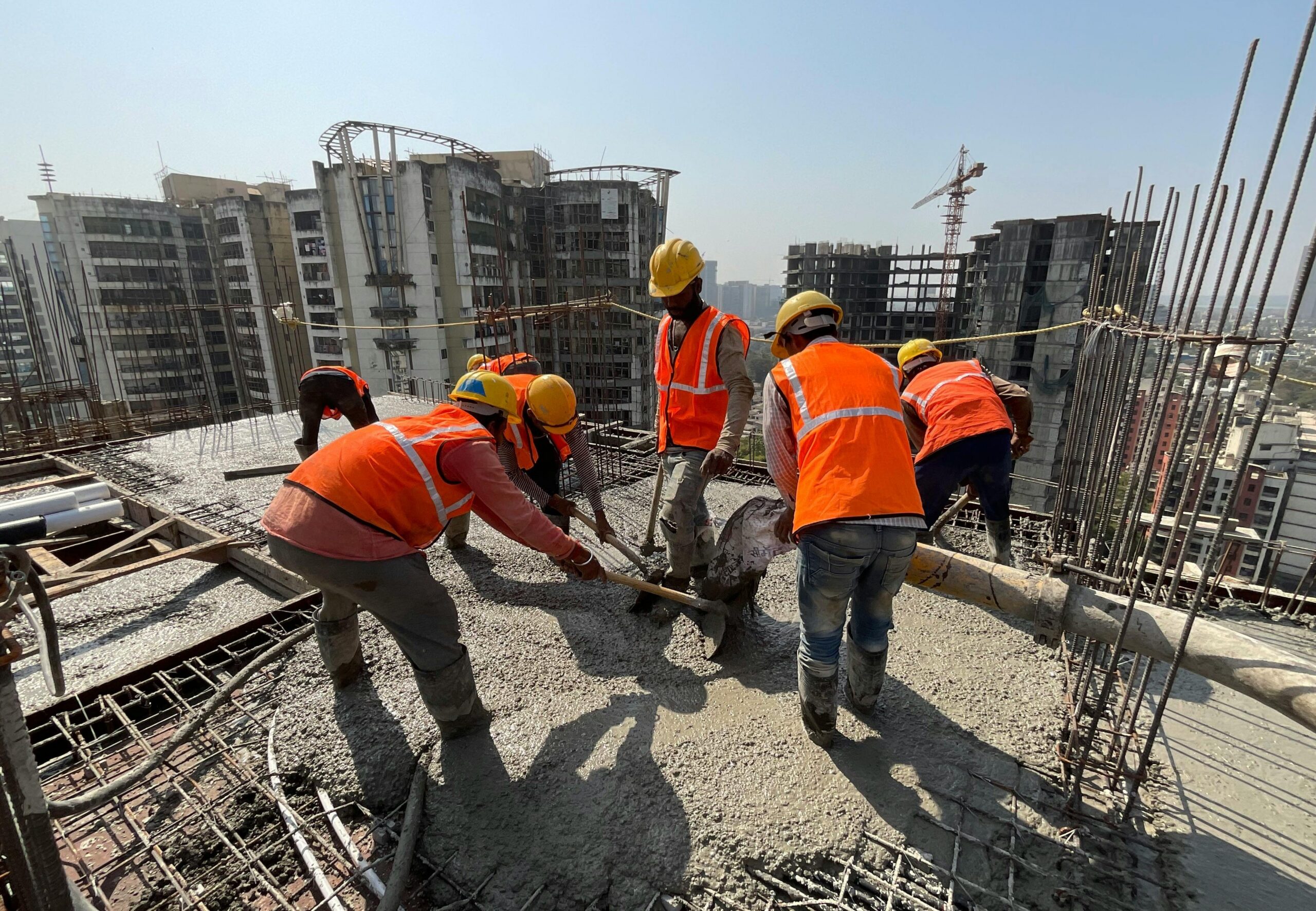
In the construction industry, concrete formulation is a constant balancing act. If a mix is too dry, it is incredibly difficult to pump, pour, and finish. If you simply add more water to make it flow better, you increase the water-to-cement ratio, which severely compromises the structural integrity and compressive strength of the final cured concrete.
To solve this dilemma, engineers rely on chemical admixtures known as plasticizers (or water reducers). One of the most common, cost-effective, and sustainable plasticizers in the world is lignosulfonate.
Derived from the natural lignin found in wood, this biopolymer completely changes how cement behaves in a mixer. Here is the straightforward science behind how lignosulfonate fluidizes concrete without the need for excess water.
The Root of the Problem: Cement Flocculation
To understand how lignosulfonate works, you first have to understand why concrete gets stiff in the first place.
When dry cement powder is mixed with water, the hydration process begins instantly. Due to complex chemical reactions and opposing electrical charges on the surface of the cement particles, the particles naturally attract one another. They bind together into microscopic clumps, a process known as flocculation.
This clumping creates a major mechanical problem: a significant amount of the mixing water gets trapped inside these cement clusters. Because this water is locked away, it cannot coat the outside of the particles to lubricate the mix. The concrete feels stiff and dry, prompting workers to add more water to get it moving—a move that ultimately weakens the slab.
The Solution: Electrostatic Repulsion
Lignosulfonate acts as a powerful dispersing agent. When added to the concrete batch, it physically and chemically breaks up these clumps through a specific mechanism:
1. Adsorption
Lignosulfonate is a long-chain polymer. When introduced into the wet concrete, these polymer chains aggressively seek out the cement particles and wrap themselves around the surface, effectively coating the cement.
2. Altering the Electrical Charge
The lignosulfonate polymer chains contain sulfonic acid groups, which carry a strong negative electrical charge. As the polymer coats the cement, it masks the natural mixed charges of the cement particle and gives the entire surface a uniform negative charge.
3. Electrostatic Repulsion (Pushing Apart)
Just like trying to push the negative ends of two magnets together, the uniformly charged cement particles now aggressively repel one another. The electrostatic force pushes the particles apart, entirely breaking up the flocculated clumps.
4. Freeing the Trapped Water
As the clumps are forced apart, all the water that was previously trapped inside is released back into the concrete matrix. This newly freed water is now available to lubricate the mix.
The Results: Better Flow, Higher Strength
By utilizing the physics of electrostatic repulsion, lignosulfonate dramatically improves the concrete mix:
- Water Reduction: Lignosulfonates typically allow concrete producers to reduce the water content of a mix by 5% to 15% while maintaining the exact same flow and workability (slump).
- Increased Compressive Strength: Because the concrete contains less water, the cement particles cure closer together. This results in a denser, less porous slab with a significantly higher compressive strength.
- Cost Efficiency: As a byproduct of the paper and wood pulping industry, lignosulfonates are highly sustainable and much cheaper to produce than synthetic superplasticizers (like polycarboxylates).
- Controlled Setting Time: Lignosulfonates naturally retard the hydration process slightly. In hot weather or for large commercial pours, this delayed setting time gives crews the crucial extra time they need to transport, place, and finish the concrete before it hardens.





Leave a Reply